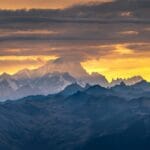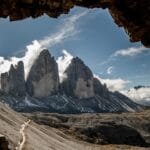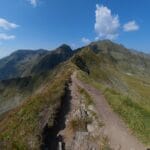

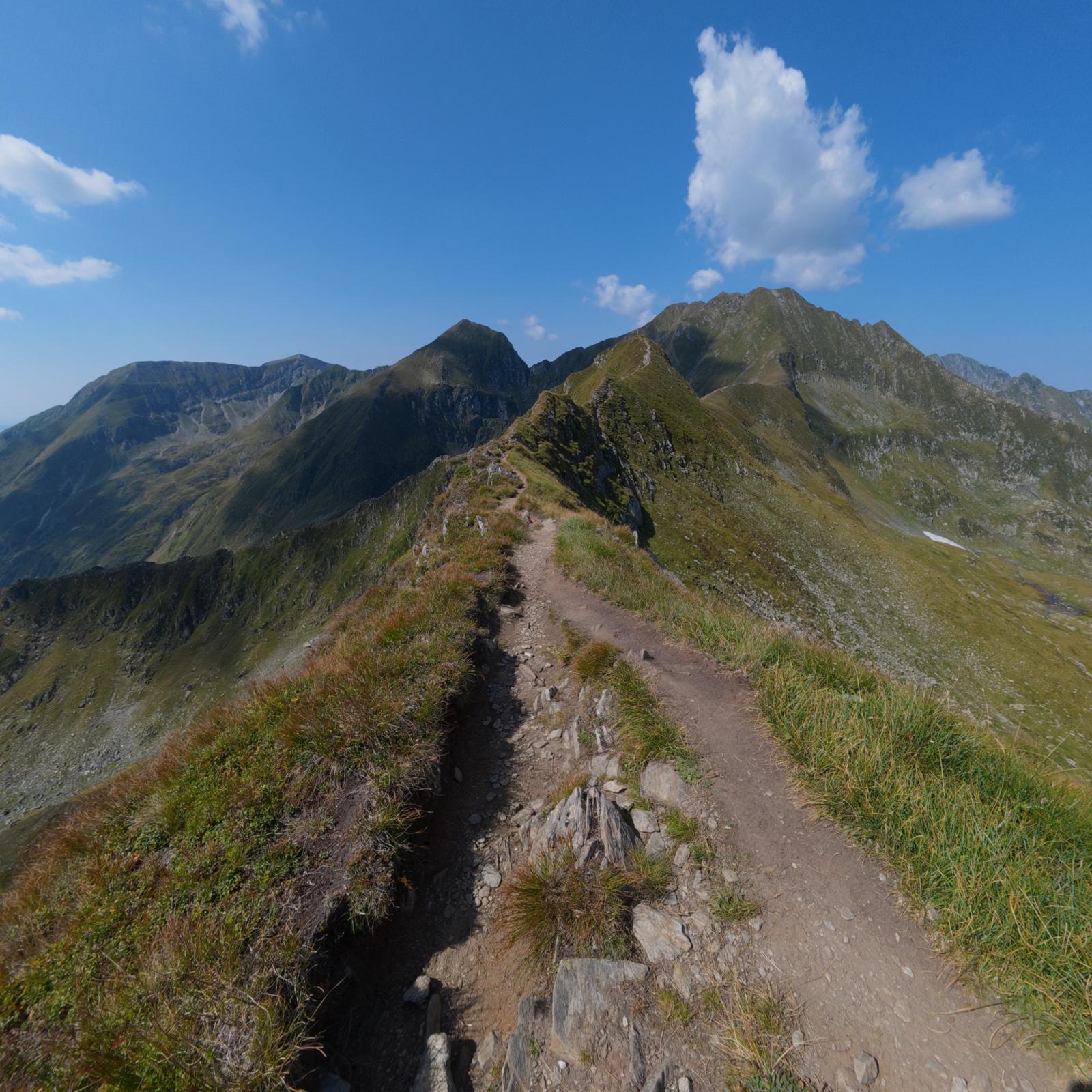

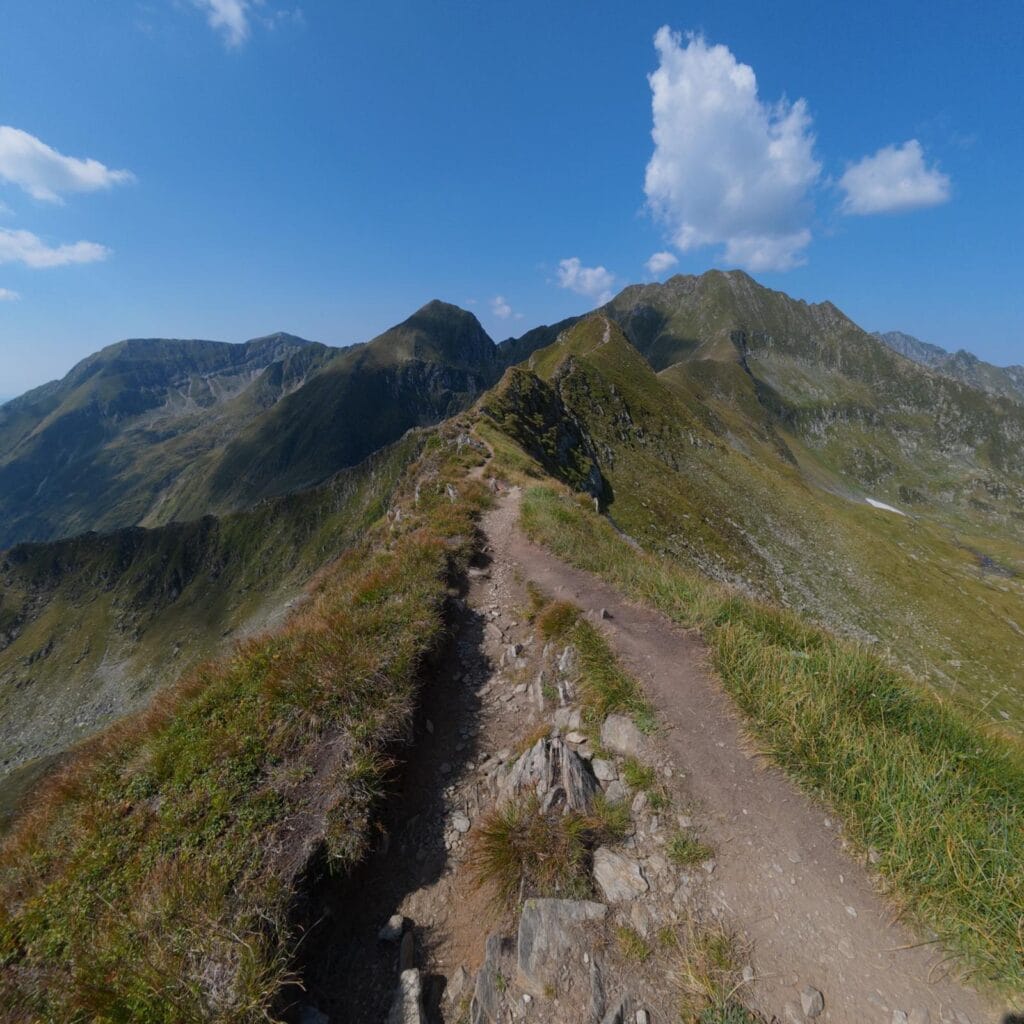
August 22, 2026, Bâlea Lake.
Lake Bâlea, formed in a glacial cirque at an altitude of 2040m, in the heart of the Făgăraș Mountains, was the starting point of one of the toughest mountain races in the world. 2X2 Race is the only race in Romania that takes place entirely at an altitude of over 2000m — a 45km route with 4200m of positive elevation gain, passing over the three highest peaks in the country: Moldoveanu (2544m), Negoiu (2535m), and Vistea Mare (2527m).
13 hours and 4 minutes later, I would understand why the 2×2 Race has the reputation it does.
The first obstacle: water
Around Podul Giurgiului, the problem wasn’t the effort, but something much more mundane — the water from the lake had a strange smell and taste, hard to tolerate. In a heatwave race, where hydration is the difference between continuing and stopping, this was a serious test. I reduced it to a minimum, exactly as much as I could endure, and continued.
From 2200m upwards, the pressure starts to increase visibly, and the stops became more frequent. Not long stops — just enough to get the rhythm going again.
Only at Șaua Caprei did I find normal, potable water. It was a boost of energy right when I needed it, just before the push toward Negoiu.
The sun, clouds, and the lesson of heatwave training
The first part of the day literally “fried” me — strong sun, with no escape on the ridge. Toward Negoiu, the sky clouded over, which was a blessing.
Here is what mattered most: something I tell anyone preparing for a summer race: heatwave training is not optional. The body must be accustomed in advance to water deficit and effort in the heat — you can’t improvise that on race day. Without this specific preparation, honestly, I don’t think I would have finished.
Altitude nutrition: liquid, not solid
The 2X2 Race is known as a self-supported race — aid stations offer strictly the minimum. At high altitude, solid food is digested very hard, so I went predominantly with liquid nutrition, combined with a little solid.
What mattered enormously:
- Strict adherence to feeding times — don’t wait to feel the need, you eat and drink on a schedule
- Salts and electrolytes, constantly, not just when I felt cramps
- Carbohydrate gels, dosed in advance, not reactively
Vitamins and electrolytes were, I think, just as important as the physical training itself.
What kept me going
Beyond strategy, there was something no preparation can simulate: the landscape. The Făgăraș Ridge, with dreamy views over Romania’s entire mountain dome, recharged me every time I was at my limit. I mountain run out of passion — and in the hardest moments, that passion is the only thing that keeps you in the race when your body wants to stop.
Physically, I was seriously tested. I think I “died” a few times during those 13 hours — but each time, I managed to handle the situation and bounce back.
How I trained: Physical, mental preparation and gear testing
A race of this magnitude is not built overnight. Beyond the weekend hours spent on the trails, the preparation included a mix of medium-distance running, interval sessions to increase the anaerobic threshold, and strength workouts dedicated to the legs and core.
An equally important aspect was the complete testing of the equipment: from the hydration pack adjusted perfectly to prevent blisters, to testing gels and energy bars during prolonged effort. On the mountain, digestive surprises or discomfort caused by unsuitable clothing can compromise months of work. The golden rule was simple: nothing new on race day.
The power of community and promoting movement in nature
Beyond numbers, seconds, medals, or rankings, the true value of a race like the 2X2 Race lies in the way it inspires people to leave their homes and rediscover nature. Promoting outdoor movement isn’t just about extreme performance; it means pure health, disconnecting from everyday stress, and rediscovering a deep connection with the environment.
Whether we are talking about a weekend family hike or a demanding mountain marathon in the Carpathians, every step taken in nature changes our perspectives. Trail running communities play an essential role: they pave the way for beginners, provide a safe space to learn, and turn the mountain from an intimidating place into a welcoming home.
What I learned, for anyone wanting to try the 2×2 Race
If you are thinking about an ultra-mountain race of this magnitude, a few concrete things from my experience:
- Train in race conditions, not ideal ones. Heat, altitude, water deficit — get your body used to it ahead of time.
- Plan nutrition on fixed hours, not by sensation. During prolonged effort, the feeling of hunger/thirst comes too late.
- At altitude, prefer liquid over solid. Digestion becomes much harder above 2000m.
- Always have a Plan B for hydration — don’t rely 100% on the sources along the route.
- Resilience is trained just like the legs. Moments when you want to quit will definitely come — the key is knowing how to manage them, not avoid them.
Why it’s worth it
Mountain running isn’t about time or ranking, first of all. It’s about what you discover about yourself when your body says “I can’t anymore” and you still find a resource. It’s about ridges like those in the Făgăraș, which you can only see by running or climbing with your own feet.
If you’ve ever thought about trying a mountain race, don’t wait for the “perfect” condition. Start with short hill workouts, get used to outdoor exertion, and build from there. Movement in nature is the cleanest form of health we have at hand — and the mountain awaits anyone willing to climb.
At 2×2 Race, running takes place only in the alpine zone and 80% on rocks
“Compared to an ordinary marathon, 2×2 Race is an ultra-sky marathon, its characteristic being given mainly by the elevation gain on the course, in this case being between 4,200 – 4,500 meters. Competitions of this type take place on rugged terrain, from dirt paths through forests and alpine hollows, up to ridges and rocks. At 2×2 Race, running takes place only in the alpine zone and 80% on rocks with a high degree of difficulty. The weather is always difficult in the mountains, so we must make sure that the runners are mentally and physically prepared for this effort,” declares Florin Bărăș, one of the competition’s organizers.
45km. 4200m D+. 13 hours and 4 minutes. An experience that stays long after the pain in your legs fades.